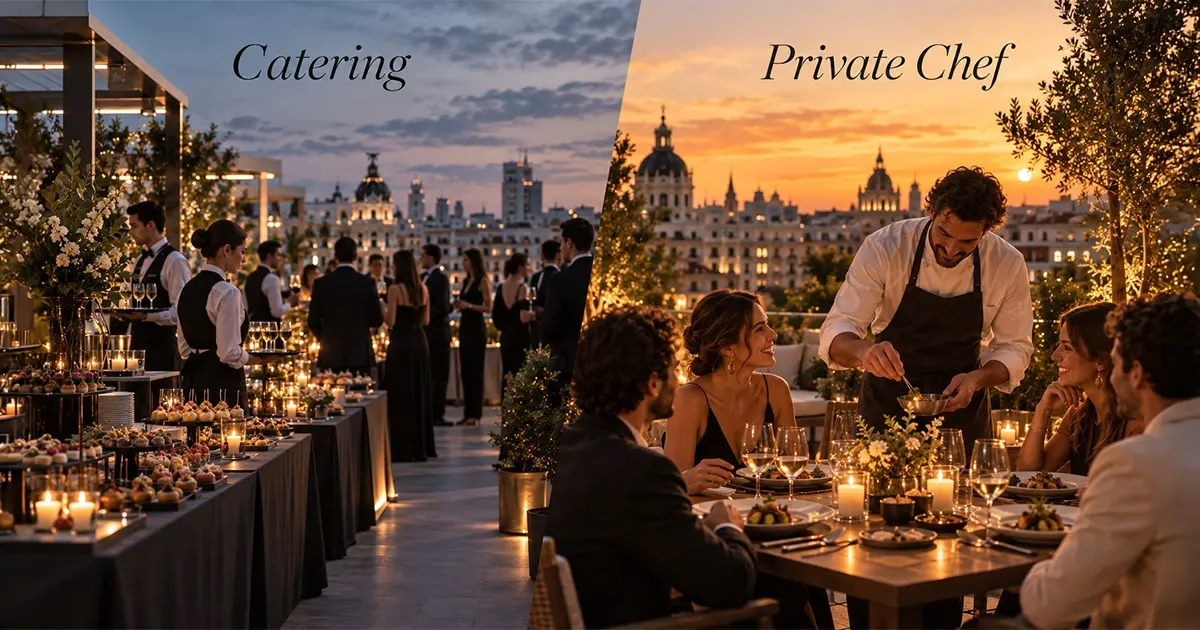


Hosting a private dinner at home can feel more personal than going to a restaurant, but it also takes more planning. You need to think about the menu, the number of guests, the kitchen, timing, dietary requirements and how you want the evening to flow. Hiring a private chef can simplify much of that process while allowing you to keep the privacy and comfort of your own home.
If you are planning a private dinner in Madrid, here are the main things to consider.
Start with the occasion
The first question is not what to serve. It is what kind of evening you want to create.
A birthday dinner, an anniversary, a relaxed evening with friends and a more formal celebration all need a different approach.
Think about:
- how many people you are inviting;
- whether guests will be seated or moving around;
- whether the meal should be the main focus of the evening;
- how formal or relaxed you want the atmosphere to feel;
- whether you want several courses or a more flexible sharing format.
Once this is clear, it becomes much easier to choose the right dining format.
1. Choose the right type of menu
Not every private dinner needs a long tasting menu.
For a relaxed gathering, tapas and sharing plates can work very well because guests can eat at their own pace and the atmosphere stays informal.
For a smaller group where the food is part of the experience, a multi-course menu may be a better fit.
Typical private dining formats might include:
- warm and cold tapas;
- sharing dishes;
- finger food;
- a plated multi-course dinner;
- a tasting menu;
- wine pairing.
The best format depends on the occasion and guest count.
Think realistically about your kitchen
A private chef does not necessarily need a professional kitchen to create a memorable dining experience, but the available space and equipment should be suitable for the chosen menu. Before booking, it is worth considering the basics: whether there is an oven and enough hob or induction space, sufficient room in the refrigerator, adequate surfaces for preparation, easy access to a sink, and reliable electricity and water. It is also helpful to know what cookware and kitchen equipment are already available at the venue. For more complex menus, the chef may prepare certain elements in advance and complete the final cooking, finishing and plating on site. If your kitchen has limited space or equipment, simply mention this early in the planning process so the menu and preparation can be adapted accordingly.
2. Confirm the number of guests
Guest count affects almost every part of the event.
It can influence:
- menu format;
- preparation;
- portion quantities;
- service style;
- final price.
For a multi-course tasting experience, smaller groups usually allow for more individual plating and a slower, more detailed service.
For larger groups, tapas, sharing dishes or finger food can often be more practical.
With Chef Donát, any changes to the number of guests should be communicated at least 48 hours before the scheduled start of the event.

3. Share allergies and dietary requirements early
Dietary information should be discussed before the menu is finalised.
This includes:
- food allergies;
- intolerances;
- vegetarian requirements;
- lactose-free requirements;
- gluten-free requirements;
- other dietary restrictions.
The earlier this information is provided, the easier it is to design a menu that works naturally for the group rather than making last-minute substitutions.
Not every dish can necessarily be adapted, so these details should always be discussed in advance.
Decide how involved you want to be
One of the advantages of hiring a private chef is that you do not need to organise every detail yourself. You can either have a fairly clear idea of what you want or simply explain the occasion and let the chef recommend the best format. With Chef Donát, the process starts with an enquiry. You share the main details of the event, and the menu, guest count, dietary requirements, timing and any special requests are then discussed by email or phone. A personalised proposal is prepared based on those details.
Consider the flow of the evening
A good private dinner is not only about individual dishes.
The pacing matters too.
For example:
- when guests arrive;
- whether you want a welcome bite;
- when the first course is served;
- how much time there is between courses;
- whether dessert should be served at the table or later;
- whether wine pairing is included.
A tasting menu usually works best when guests are happy to spend the evening around the table.
A tapas or sharing-style dinner is better suited to a more social and flexible atmosphere.
4. Think about wine pairing
Wine can add another layer to the experience, but it does not need to dominate the evening.
If you are interested in wine pairing, it is best to discuss it together with the menu.
The wines can then be selected around:
- the flavours of the dishes;
- the structure of the menu;
- your preferences;
- the style of the occasion.
For a relaxed tapas evening, this might mean just a few well-chosen bottles.
For a more refined tasting menu, pairing can be more structured.
Make sure the venue works for the event
If your dinner is taking place in a private home, Airbnb or holiday rental, it is worth checking any relevant venue rules before making your arrangements. Make sure that outside chefs are permitted and that the chef will have full access to the kitchen and any necessary appliances. It is also helpful to confirm practical details such as building access, parking or unloading options, noise restrictions and the maximum number of guests allowed at the property. Clarifying these details in advance helps everything run smoothly on the day and avoids unexpected limitations during the experience.
5. Understand what is included
Before booking, make sure you know exactly what the service covers.
With Chef Donát, the agreed service may include:
- menu planning;
- ingredient sourcing;
- preparation;
- cooking at the venue;
- plating and presentation;
- serving;
- cleaning and tidying the kitchen areas used during the service.
Ingredient sourcing is included, so guests do not need to shop for the menu themselves.
This is one of the biggest practical differences between hiring a chef and simply ordering food.
6. Understand the booking and payment process
Once the details have been discussed and the personalised proposal has been accepted, Chef Donát approves the booking request.
A secure Stripe payment link is then sent by email for the 50% deposit.
The booking is confirmed once the deposit has been paid successfully.
The remaining 50% is due at the end of the event, before Chef Donát leaves the venue.
If you cancel at least 48 hours before the scheduled start of the event, the deposit is refunded in full.
Cancellations within 48 hours are non-refundable.
Give yourself time to enjoy the evening
This is perhaps the biggest reason people choose a private chef. Instead of spending the evening shopping, cooking, plating and cleaning, you can focus on your guests. The food still becomes part of the occasion, but you do not have to disappear into the kitchen while everyone else is enjoying the evening. That is what makes private dining different from simply having dinner at home.
Planning a Private Dinner in Madrid?
Chef Donát creates private dining experiences in Madrid and within a 50 km radius. From relaxed tapas and sharing dishes to refined multi-course tasting menus, each experience is planned around the occasion, the guests and the atmosphere you want to create.
Tell me about your evening and I’ll help you choose the experience that fits it best.